
 JA
JA

PROJECT
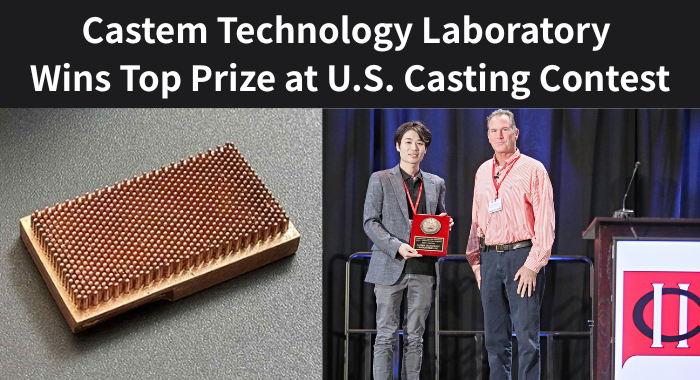
The “Pure Copper Heat Sink” manufactured by Castem Technology Laboratories (CTL), based in California, USA, won the overall grand prize at the casting contest hosted by the Investment Casting Institute (ICI) and was featured in its official journal.
This product is a pure copper heat sink equipped with fine pins and is expected to be utilized in the rapidly advancing AI sector. Below, we introduce details of the award-winning work, the challenges faced during production, and future prospects.
About the ICI Casting Contest
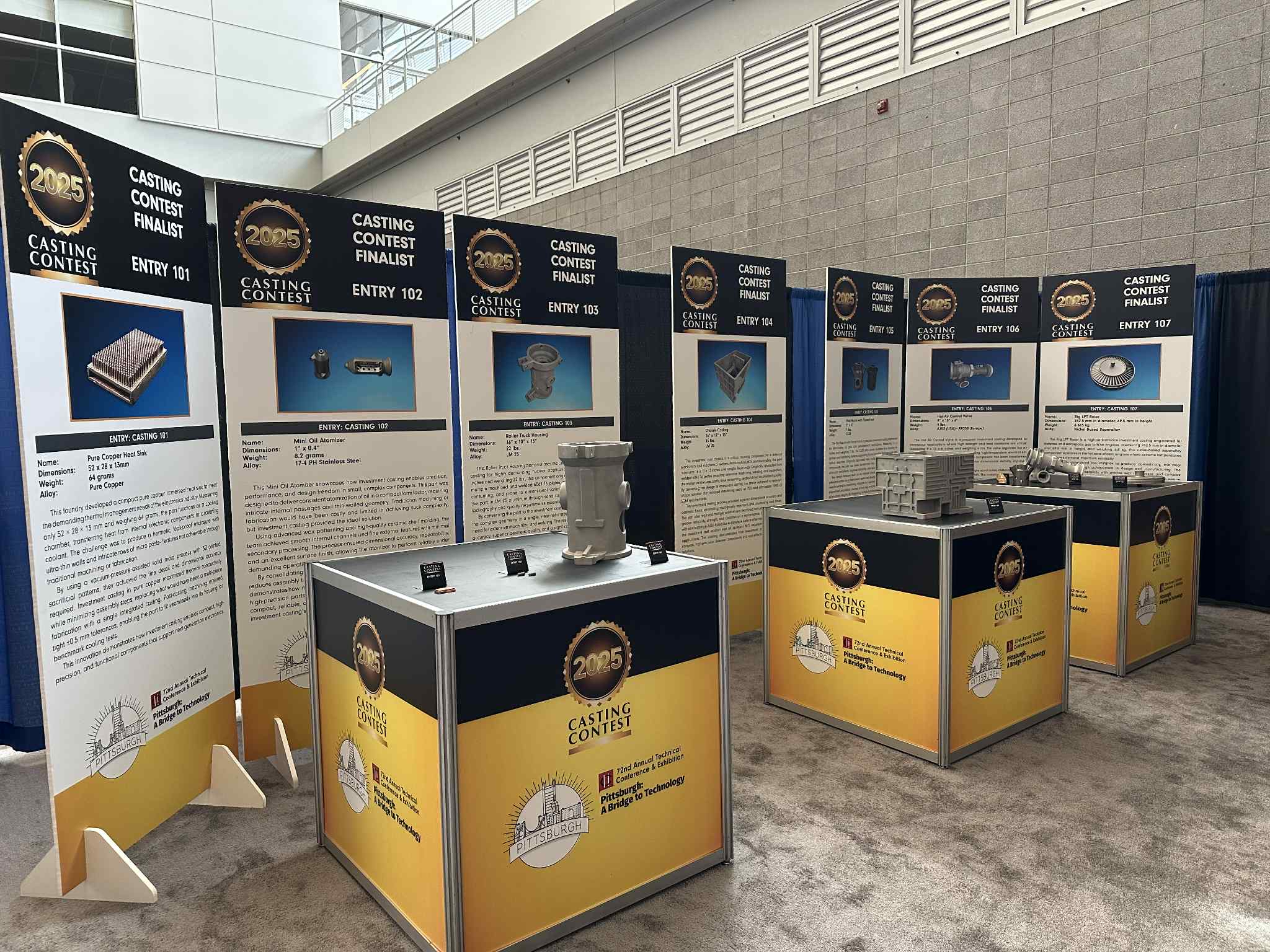
In the ICI Casting Contest, the grand prize winner is selected by votes from conference participants among finalists who have passed a preliminary screening. The judging criteria are as follows:
・Parts that optimize the investment casting process
・Parts that replace assemblies of multiple components
・Parts that reduce costs
・Parts that improve product reliability and performance
・Parts that benefit customers
CTL’s entry was selected as the overall winner from among seven finalists.
About the Award-Winning Product
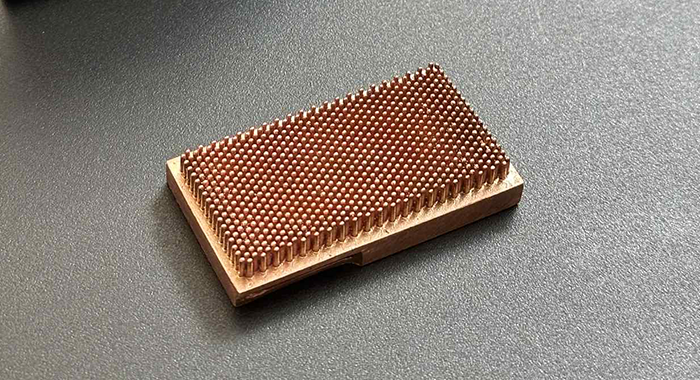
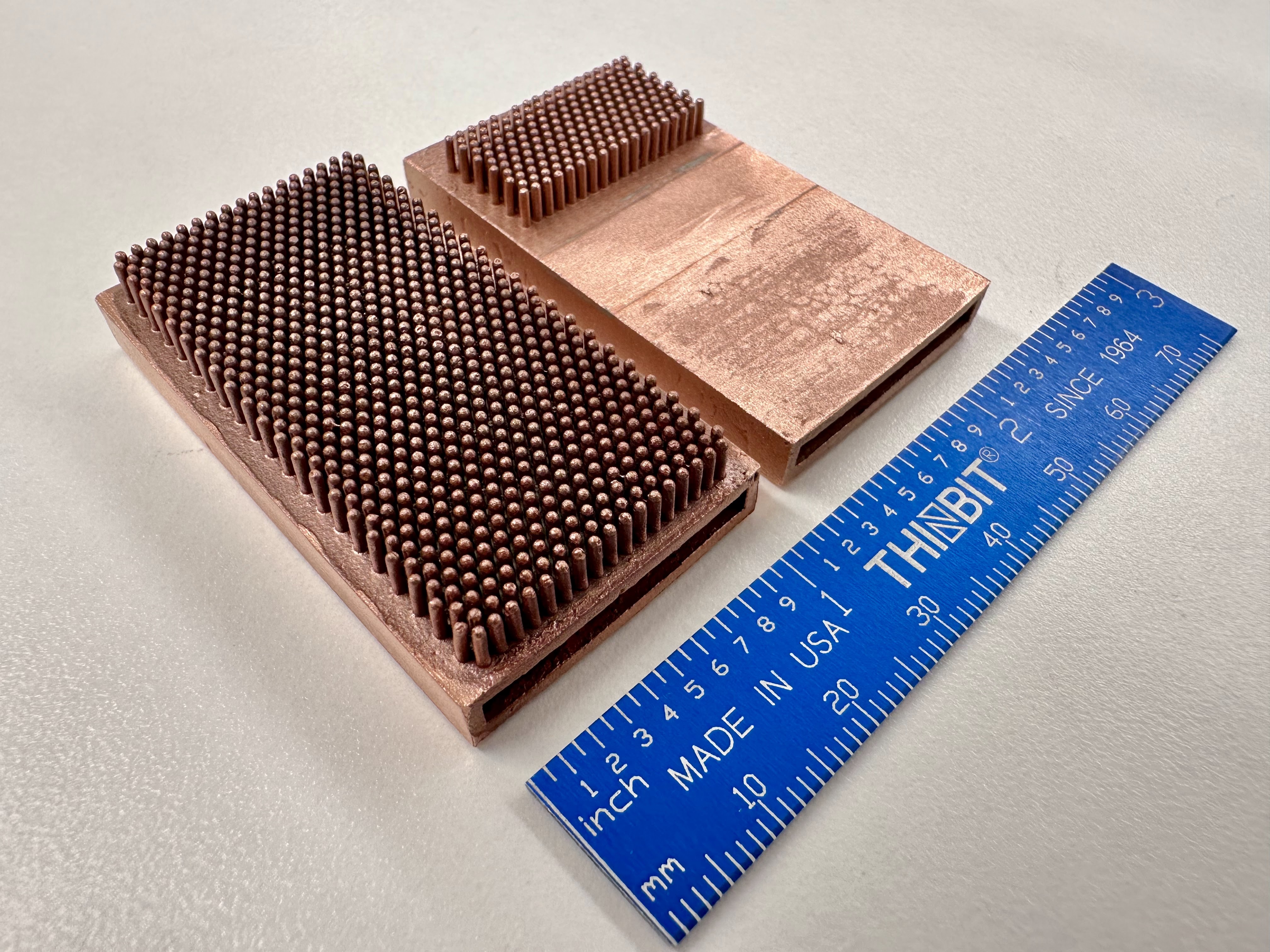
It features 752 fine pins arranged in rows, each with a diameter of 1 mm and a height of 4 mm, spaced at a pitch of 1.15 mm.
Developed to meet the stringent thermal management needs of the electronics industry, this compact immersion-type heat sink made of pure copper functions as a cooling chamber, transferring heat from internal electronic components to circulating coolant.
Development Background
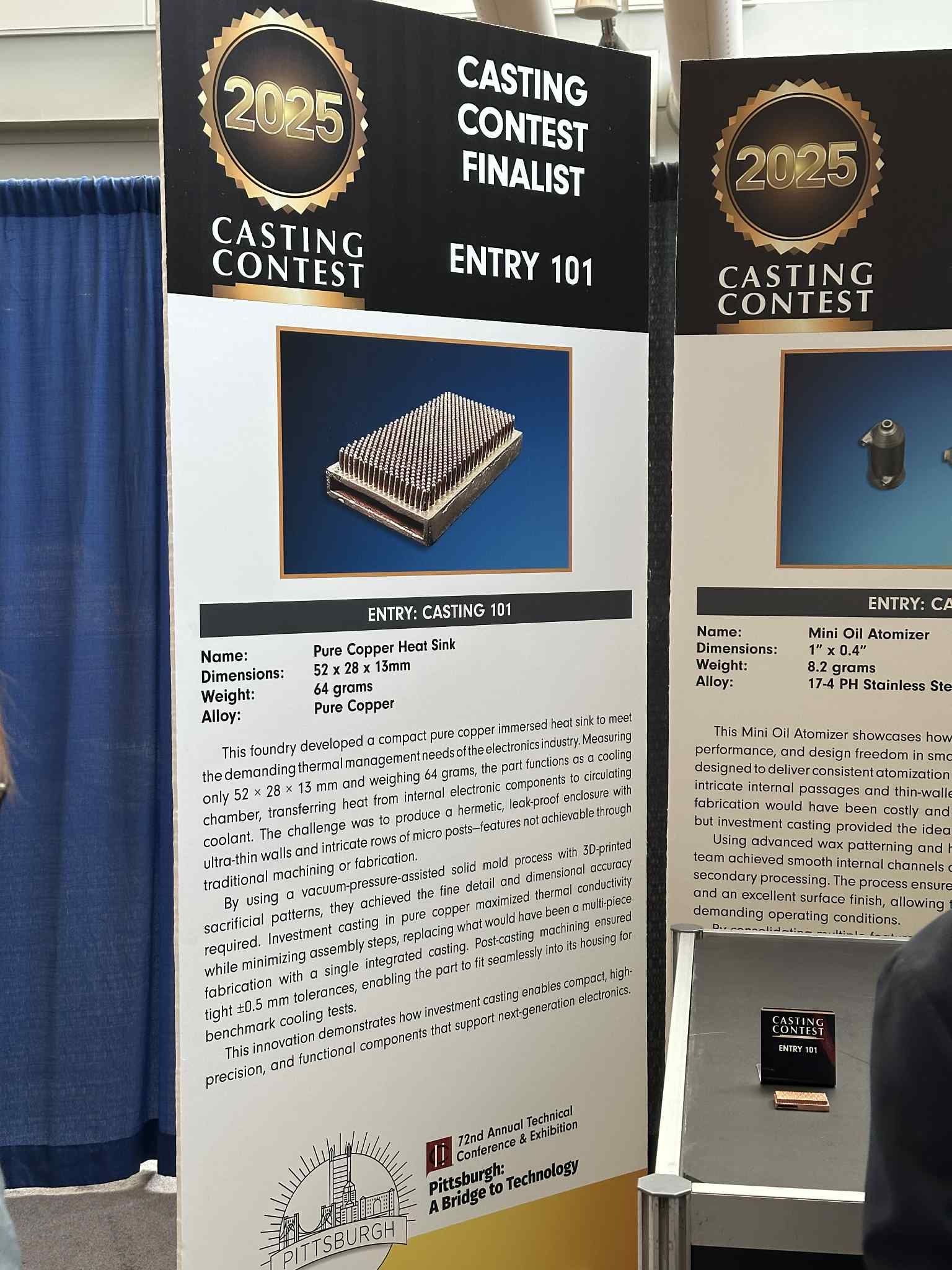
The key challenge was to achieve a complex geometry featuring countless fine pins without machining, while forming a highly airtight, leak-free housing.
By utilizing plaster casting with sacrificial patterns produced by a resin 3D printer, combined with vacuum melting and pressure casting, we successfully reproduced the fine features. Post-processing was limited to finishing a single integrated port, enabling seamless assembly within a dimensional tolerance of ±0.5 mm.
Future Applications
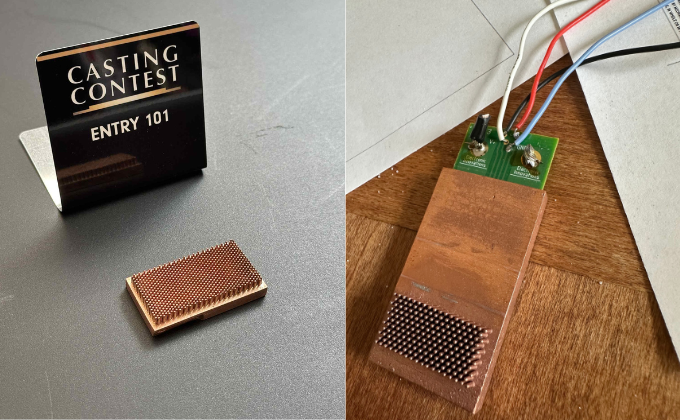
The current design is a small-scale experimental test probe for benchmarking purposes and is smaller than the final intended size. Experiments conducted using this component are expected to generate research data that will contribute to the future development of AI.
Developer’s Comment

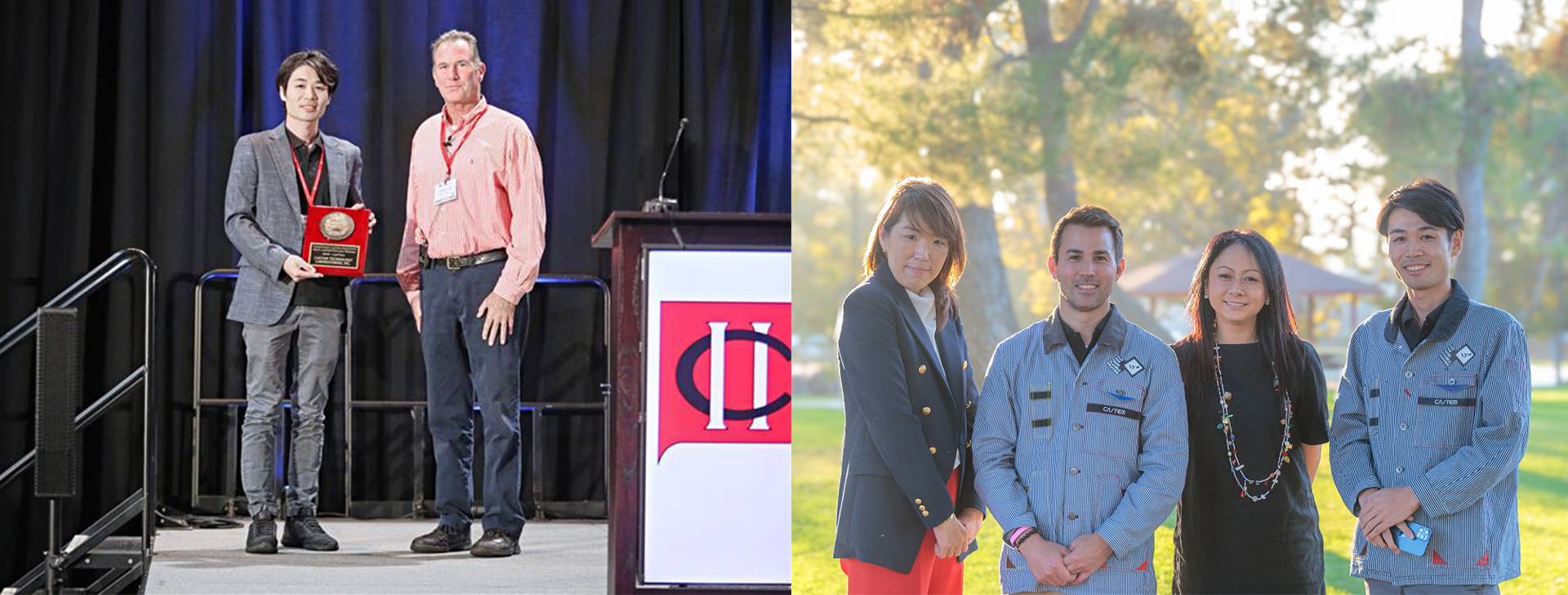
Representing CTL, Senior Manager Okamoto shared insights into the development challenges and his thoughts on receiving the award.
At the initial stage of development, we were concerned about metal flow—whether the molten metal would smoothly fill the mold cavity. However, by combining the block mold method, in which a refractory material similar to plaster is poured and solidified to form the mold, with vacuum melting and pressure casting, we were able to resolve this issue more smoothly than expected.
On the other hand, we struggled with the unusually rapid solidification of the material. This component is manufactured using atmosphere-melted oxygen-free copper, which is exceptionally high in purity for a cast product.
Initially, the yield rate was only about 10%, and acceptable parts were almost a matter of luck. Through repeated trial and error, we revisited the fundamentals of casting—such as redesigning the gating system with tapered geometry to secure directional solidification even within a split second—and gradually established a stable manufacturing method.
At the ICI Casting Contest, where high-tech casting components from fields such as aerospace were showcased, our pure copper heat sink produced by plaster casting stood out as a rare example and attracted significant attention from attendees.
We hope that experiments conducted using this component will generate data contributing to the continued advancement of AI.
For inquiries regarding materials, product examples, and manufacturing methods handled by Castem, please feel free to contact us via our website.
https://www.castem.co.jp/contact/