
 JA
JA

PROJECT
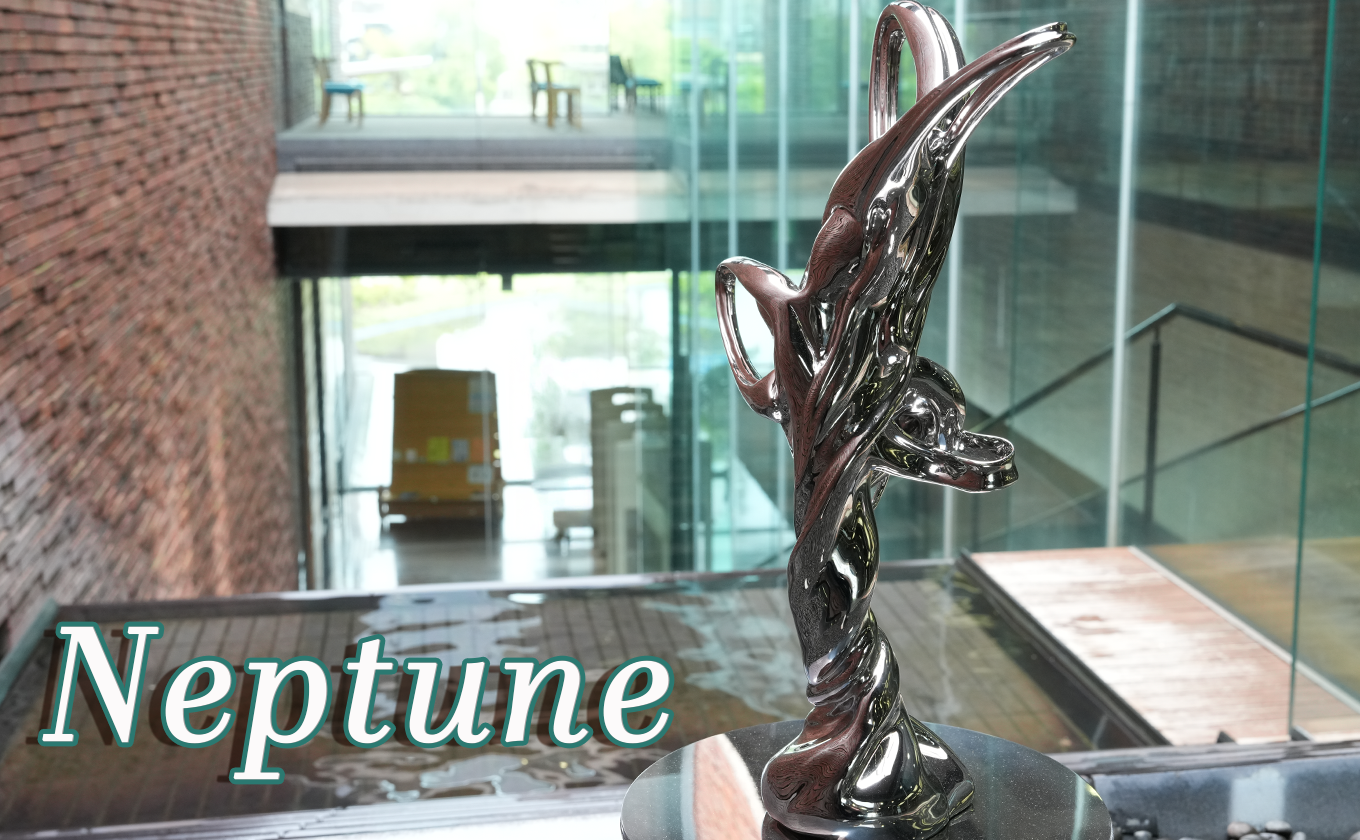
CASTEM has completed a collaborative project with Mr. Masaaki Noda, a New York–based contemporary artist with an international career.
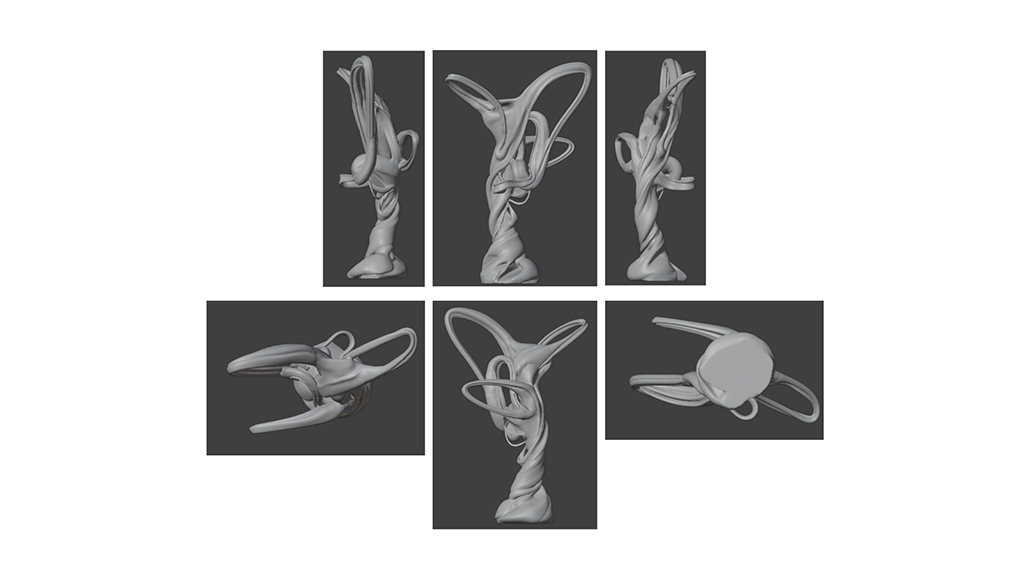
The company provided comprehensive technical support for the creation of Neptune, a new sculptural work realized through advanced digital casting technology.This project marked a new challenge for Mr. Noda, as the work was developed from 3D scan data. Together, CASTEM and the artist explored new possibilities at the intersection of cutting-edge manufacturing and contemporary art.
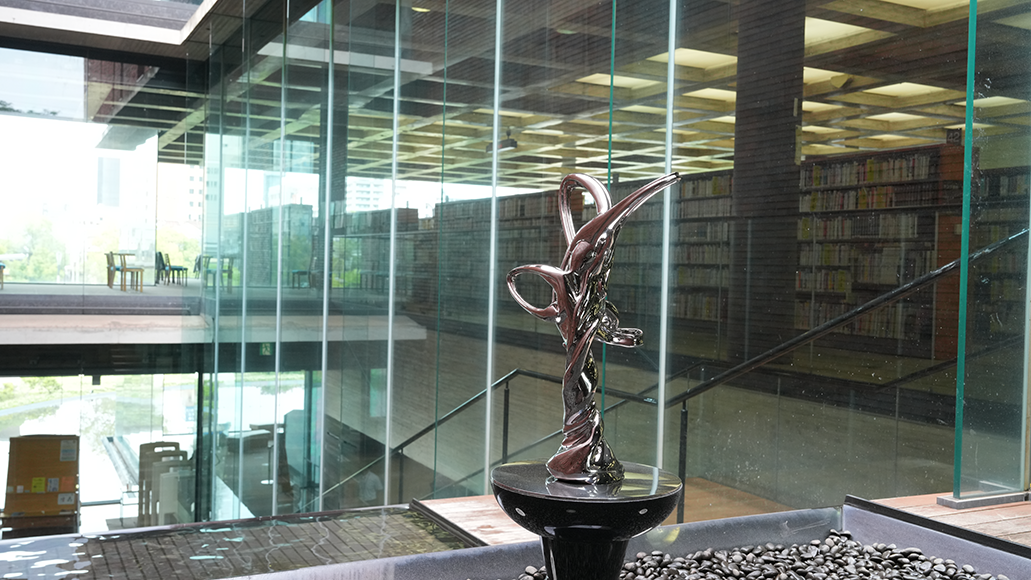
The sculpture was installed at the Fukuyama Central Library in Hiroshima Prefecture in June 2025.
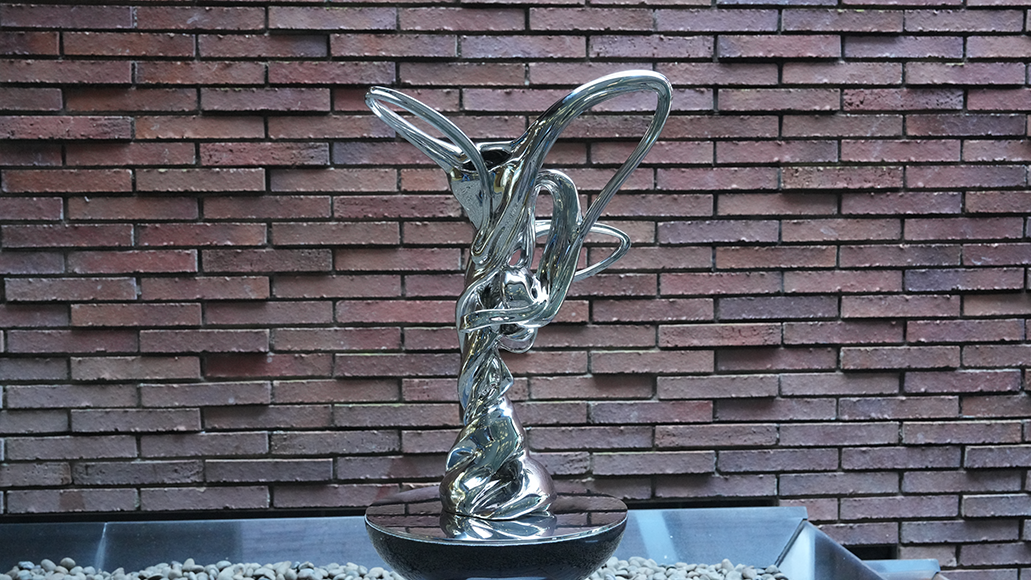
Its surface reflects surrounding light, water, and brick architecture, creating constantly shifting expressions depending on the viewer’s perspective. The work is named after Neptune, the Roman god of the sea.
Visitors to the library often pause to observe the work in quiet fascination.
The sculpture was created using CASTEM’s proprietary Digital Cast® technology, which combines 3D printing with precision casting.
Neptune was cast in SCS11, a duplex stainless steel, and measures approximately 50 cm in height and 33 cm in width. Including its granite base, the total height reaches approximately 1 meter.
Because the sculpture is installed at the top of a cascading waterfall, this material was selected for its excellent corrosion resistance.
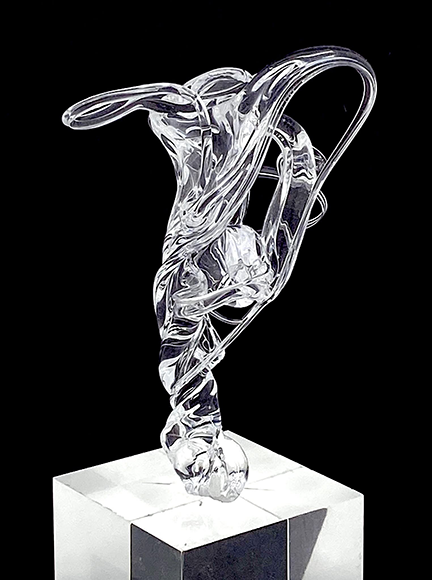
In the autumn of last year, the renewal of an artwork at the Fukuyama Central Library was planned. Having previously collaborated with CASTEM on works for a solo exhibition, Mr. Noda commissioned the company to produce the new sculpture.
The original glass piece was 3D scanned, and numerous discussions were held based on the digital data. While preserving the essence of the original form, subtle adjustments were made to surface irregularities and angles unique to glass. The sculpture was then enlarged to approximately five times the size of the original.
Mr. Noda explains:
“This size and shape were only possible because the work was made of metal rather than glass. The prototype existed digitally, which allowed me to reinterpret it freely. The work was born from chance, but by embracing transformation, its potential expanded.”
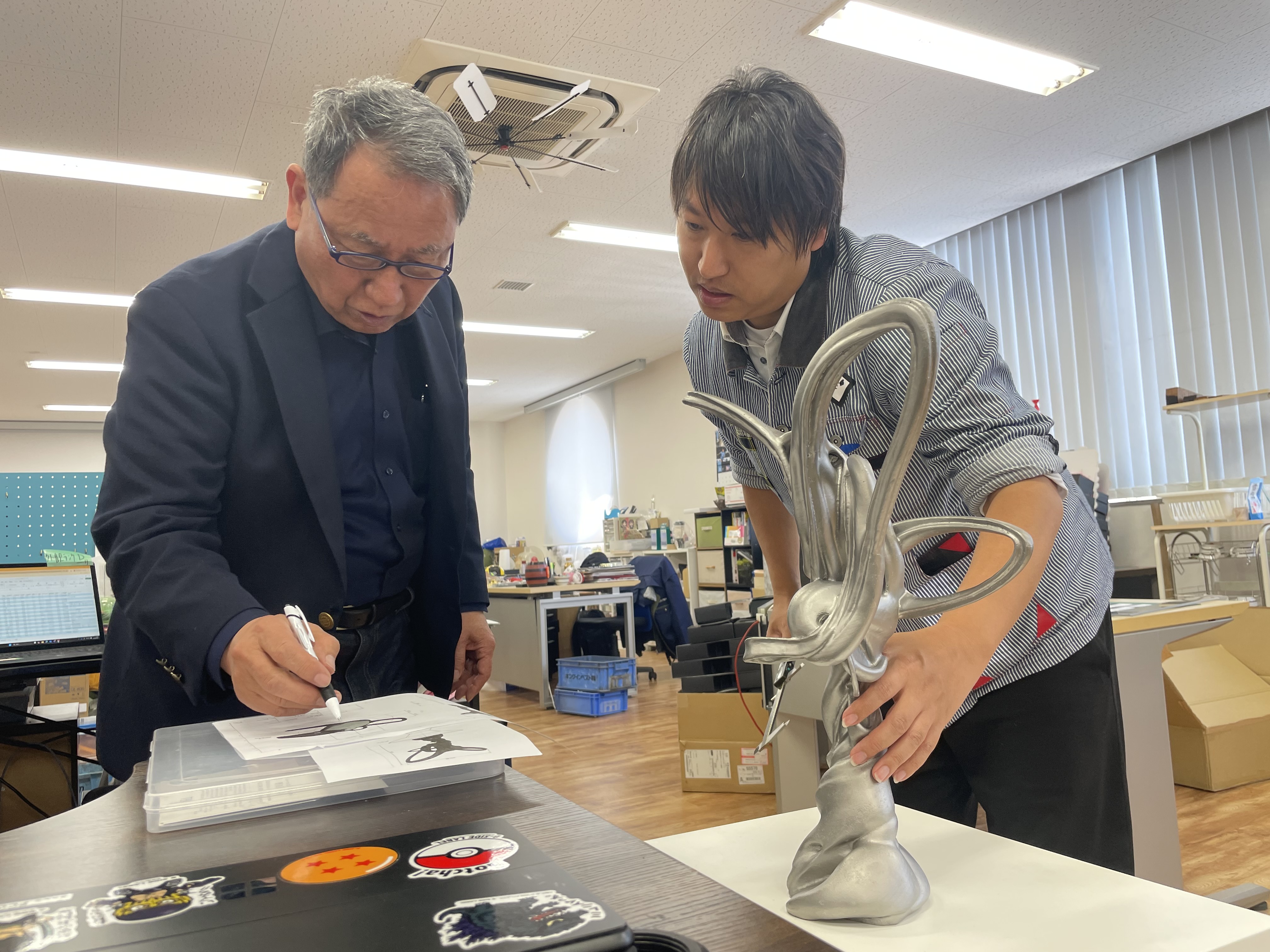
Mr. Noda explains:
“This size and shape were only possible because the work was made of metal rather than glass. The prototype existed digitally, which allowed me to reinterpret it freely. The work was born from chance, but by embracing transformation, its potential expanded.”
SCS11 is a duplex (austenitic–ferritic) stainless steel known for its high strength and outstanding resistance to acids, pitting corrosion, and stress corrosion cracking. It is widely used in seawater pumps and industrial machinery components due to its durability against seawater, sulfuric acid, and alkaline environments.
After casting, the sculpture was meticulously polished by skilled craftsmen to achieve a mirror finish. As a result, the appearance of Neptune continuously changes depending on light conditions and viewing angles, creating a mystical visual experience.
Digital Cast® Technology
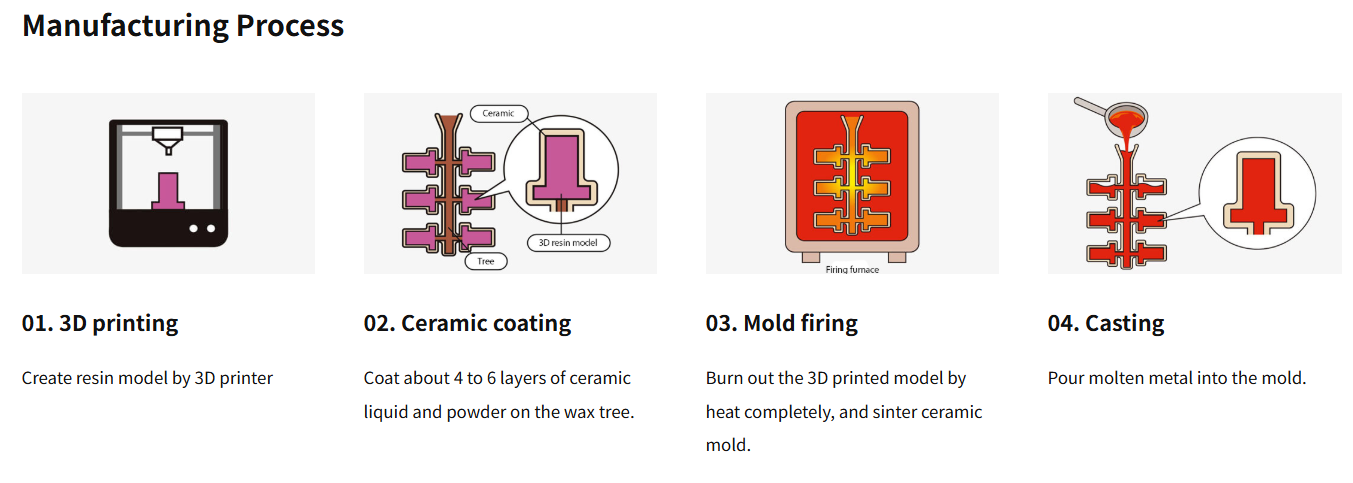
This approach enables the production of one-off castings without the need for molds, making it particularly suitable for development, prototyping, and custom-made products.
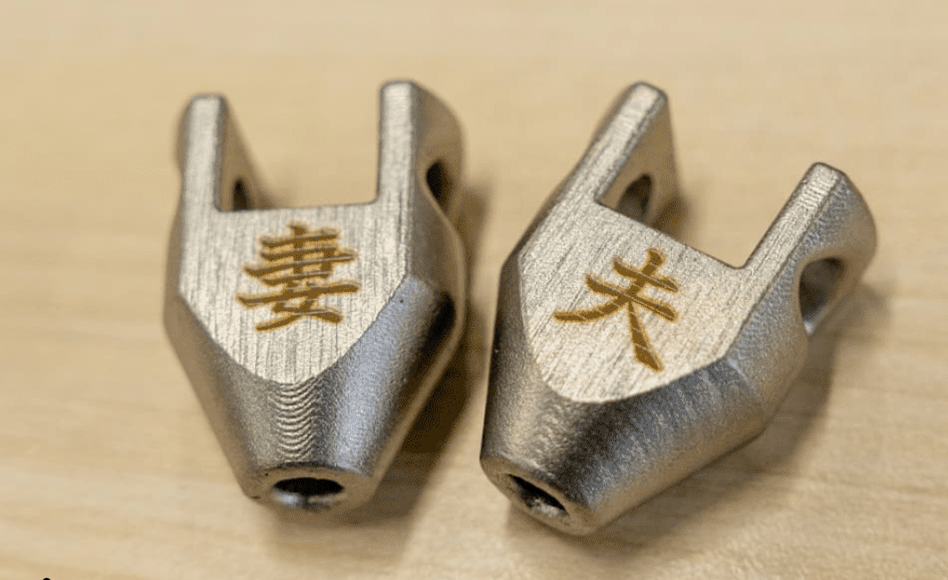
In addition to industrial applications, CASTEM has responded to requests from artists, individuals, and local communities, expanding the possibilities of casting technology beyond manufacturing.
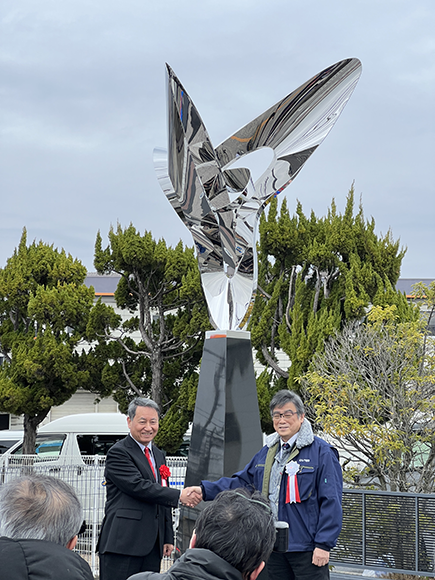
He later created Hayato, a monument installed at the main gate of CASTEM’s headquarters, symbolizing the company’s aspiration to pursue bold dreams and innovation.
CASTEM is currently exploring the development of merchandise featuring Mr. Noda’s artworks.
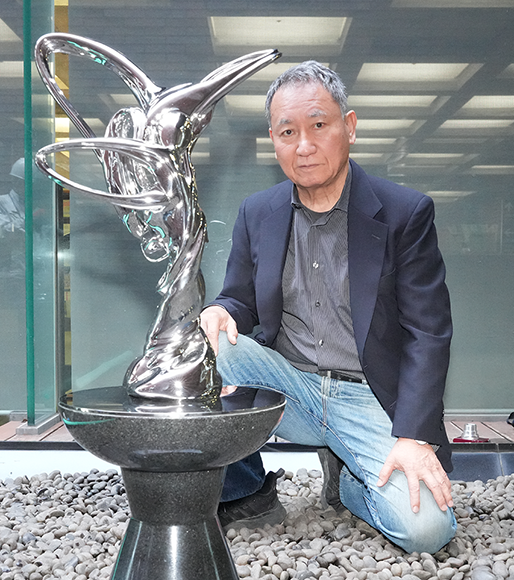
The highly polished surface reflects light and blends with the surrounding environment.
Its form changes depending on the viewing angle, and this unpredictable irregularity is what makes it compelling.
I hope the work adds a sense of enjoyment to the space, even for those who are not particularly interested in art.
I believe this collaboration—made possible by CASTEM’s technology and ideas—is unprecedented, and I am confident that together we can create something truly remarkable.”
Profile: Mr. Masaaki Noda
Born in Fukuyama City, Hiroshima Prefecture, in 1949, Mr. Masaaki Noda graduated from the Department of Fine Arts at Osaka University of Arts in 1972. He relocated to New York in 1977 and has since spent over 50 years exhibiting his work internationally, primarily in New York.
In addition to gallery exhibitions, he has created numerous public monuments and has actively promoted cultural exchange through art.
His honors include the Medal with Dark Blue Ribbon of the Spring Imperial Decorations (2017) and the 38th Hiroshima Culture Award.
Mr. Noda maintains a long-standing relationship with Greece, where he has installed paired sculptures related to Lafcadio Hearn in both Athens and Matsue City, Shimane Prefecture. In 2023, he was awarded the Order of Honor (Gold Cross) by the President of Greece.